


Research Agenda
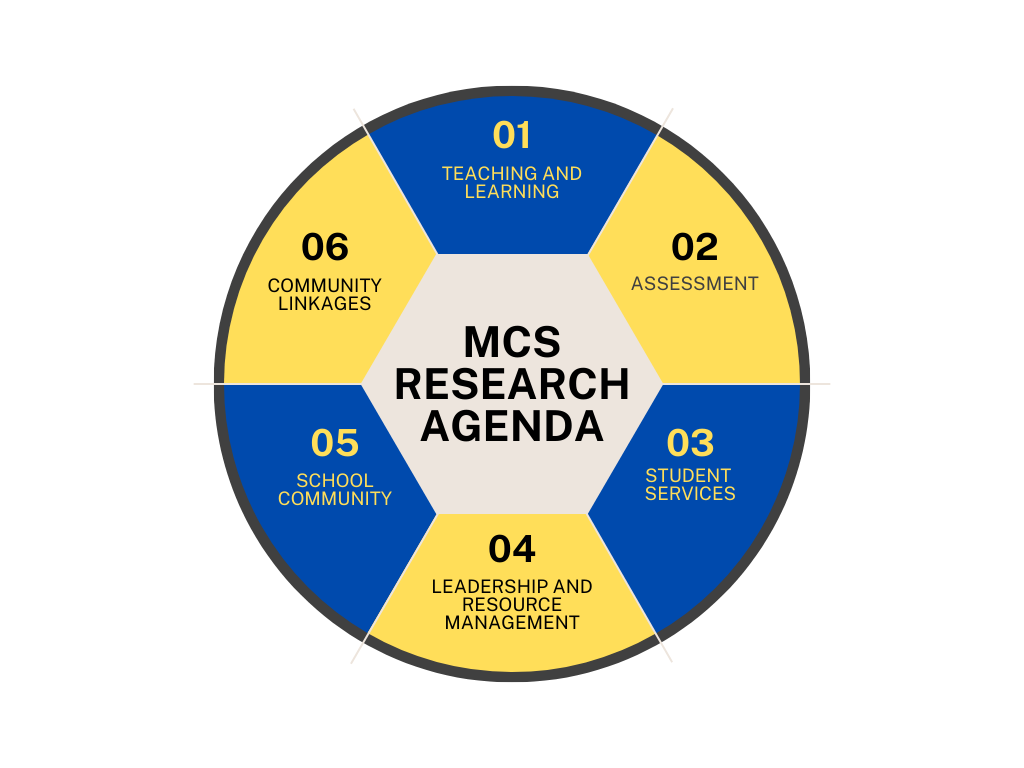
The MCS Research Agenda presents a holistic and student-centered framework that reflects the core priorities of the institution. At its heart, it emphasizes continuous improvement in teaching, student support, leadership, and community engagement. Each area is interconnected, recognizing that quality education is shaped not only by instruction but also by assessment practices, student services, leadership systems, school culture, and external partnerships.
1. Teaching and Learning
This pillar focuses on strengthening classroom practices and ensuring that instruction is meaningful, innovative, and responsive to learners’ needs. It highlights the importance of curriculum relevance, teacher competence, and learner engagement.
Priority research areas include:
- Effectiveness of innovative and learner-centered teaching strategies
- Curriculum alignment with institutional vision and national standards
- Integration of educational technology in classroom instruction
- Outcomes-based education and competency development
- Professional development and instructional coaching models
- Classroom management practices and student engagement
2. Assessment
Assessment pillar ensures that learning is accurately measured and that results inform instruction. It promotes fairness, transparency, and alignment between objectives and evaluation tools.
Priority research areas include:
- Development of authentic and performance-based assessments
- Analysis of formative and summative assessment practices
- Data analytics for academic performance monitoring
- Standardized test performance evaluation and improvement strategies
- Feedback systems and grading transparency
- Assessment literacy among faculty members
3. Student Services
This area emphasizes holistic student development beyond academics. It ensures that learners receive adequate support for their academic, emotional, social, and career growth.
Priority research areas include:
- Effectiveness of guidance and counseling programs
- Career readiness and work immersion outcomes
- Student well-being and mental health initiatives
- Inclusivity and support for learners with diverse needs
- Co-curricular engagement and leadership development
- Health, safety, and student protection programs
4. Leadership and Resource Management
Effective leadership sustains institutional growth. This pillar examines governance, strategic planning, financial management, and resource allocation.
Priority research areas include:
- Instructional and transformational leadership practices
- Strategic planning and school improvement initiatives
- Financial management and budget optimization
- Human resource development and performance evaluation systems
- Facilities management and learning environment enhancement
- Policy implementation and institutional compliance
5. School Community
A strong internal school culture fosters collaboration and shared responsibility among administrators, teachers, students, and staff. This pillar investigates the collaboration among MCS stakeholders and its community as a whole.
Priority research areas include:
- School climate and organizational culture assessment
- Parent-teacher collaboration models
- Faculty professional learning communities
- Student participation in institutional governance
- Internal communication effectiveness
6. Community Linkages
This pillar highlights partnerships with external stakeholders to enrich learning experiences and strengthen institutional impact.
Priority research areas include:
- Industry partnerships and internship effectiveness
- Collaboration with higher education institutions
- Alumni engagement and contribution programs
- Community outreach and extension initiatives
- Benchmarking practices and accreditation readiness
- Public-private partnerships